Friday, January 31, 2014


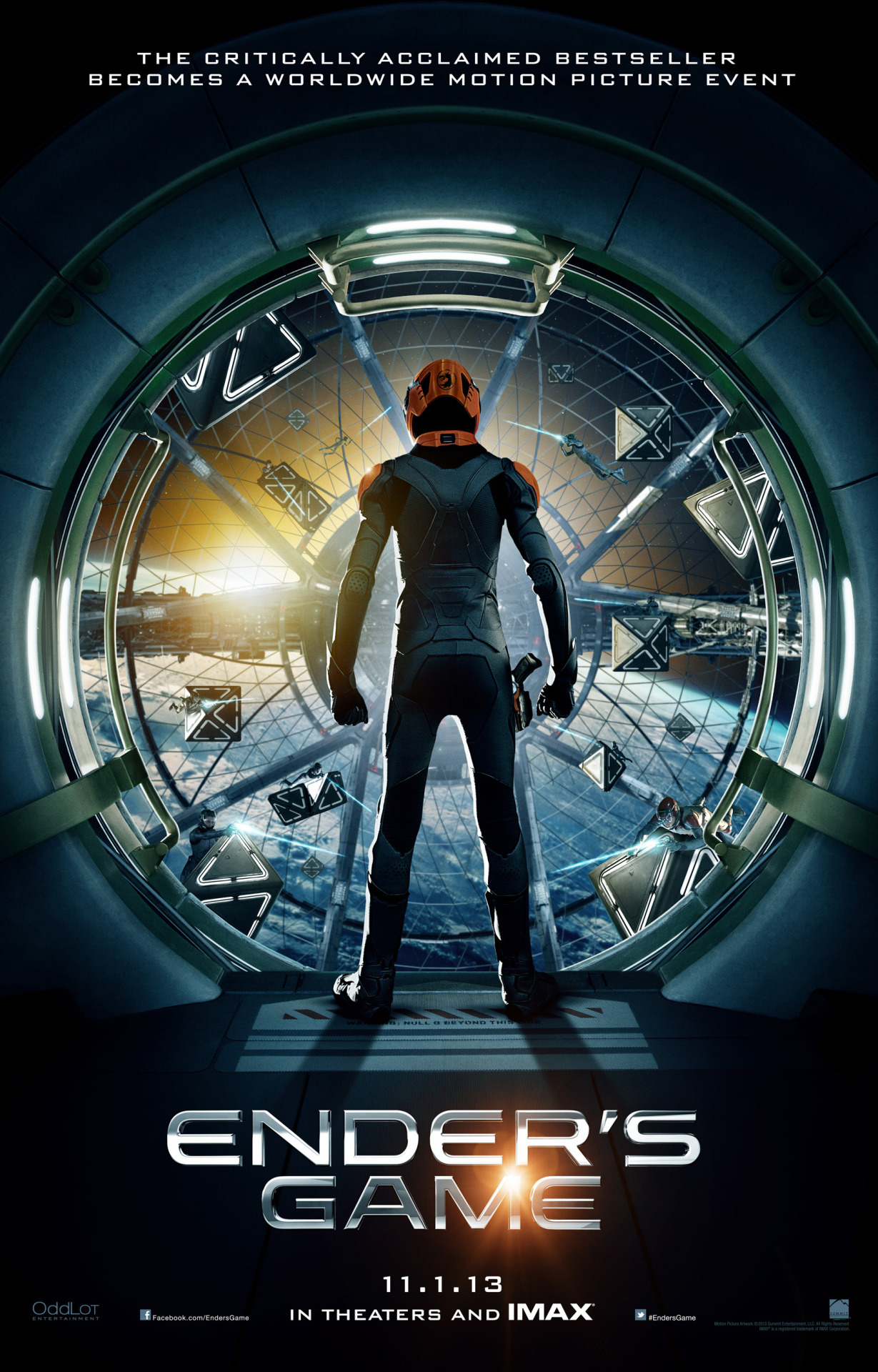
Ender’s Game
2013
PG-13
Produced by: John Textor, Lynn Hendee, Robert Chartoff, Linda McDonough, Alex Kurtzman, Roberto Orci, Orson Scott Card, Gigi Pritzker
Directed by: Gavin Hood
Written by: Gavin Hood, Orson Scott Card
Starring: Asa Butterfield, Harrison Ford, Hailee Steinfeld
Summit Entertainment

1.93/5 Stars
Consensus: One of the most appalling and forgettable famous-teen-book-to-film adaptations, Ender’s Game manages to ignore everything that was good about the book, and focus entirely on CGI you could get from staying home and playing a video game.

Plot: Ender Wiggins (Asa Butterfield) is a recruit for the military in the distant future. After being attacked by aliens the army recruits children whose creativity and ability to perceive strategy differently may give them an edge.

Directing: When you can manage to make Harrison Ford (Colonel Graff) seem bored and awkward, in an attempt to portray a stern and opinionated character, you know you’re doing it wrong, even if Ford is past his prime (and he is past his prime), every actor involved in this film should be seriously pissed with Gavin Hood. How one managed to mess up such an all-star cast so amazingly well is beyond comprehension. From awkwardly presented relationships, (i.e. that of Ender [Asa Butterfield] to his family) to a poor explanation of the world of Ender’s Game, its no wonder we’ve never heard of Hood before. The entire film seems to be totally whitewashed and confused, especially considering the brilliance of the source material it was drawing off of. *

Acting: You would have high expectations and hopes from such an all-star cast, even Asa Butterfield gave a great performance in Hugo (2011) and the talents of veterans Harrison Ford and Ben Kingsley (Mazer Rackham) are added to boot, but not even they could save the miserable script and bad directing from itself. Harrison Ford seems to slowly realize what a bad movie he is in and by the end of the film looks as embarrassed as we feel watching him. He and Kingsley almost seem to just feed off each other’s anger at being brought to such a lowly place, don’t mistake this as acting, its just genuine professional anger. In fact several scenes could have just been rage against Hood, who was later edited out and replaced by Butterfield or one of the other unfortunate actors to have been hired for this film. Wooden, campy, unrealistic, and forced acting riddled the film.*

Editing: The editing was fine, they didn’t totally mess it up at least, like every other aspect of this miserable film. The shots all make sense and flow together well. The bored actors look bored in a consistent and logical manner. Again, nothing very cool or innovative or noticeable at all is presented, it very much follows the “safe” route of editing and provides nothing interesting at all, so that’s consistent. ***

Art Direction: The sci-fi landscape was really well imagined at times, and then there were shots of Ender in his house and it almost seemed like they said “eh, whatever, just put him in one of the extra sets for a Disney Channel pre-teen sitcom, it doesn’t need to look all sci-fi and post-alien invasion, people can use their imaginations! We just spent all our money on CGI! Because that’s what people go to movies for!” Yeah, it was like that. **

Cinematography: Imagine if your grandpa took a photography class, and managed to actually do really well, and then he went to Apple and took a bunch of pictures of fancy sci-fi looking stuff that he didn’t really care about or understand, just for credit for the class. Now imagine your weird uncle who is 40 and still lives with grandpa thought it would be really neat to photo-shop a bunch of cool looking sci-fi stuff he learned about in his community college graphic design class. You’d be stoked that it wasn’t the most awful thing you ever saw, but you wouldn’t really be excited about it either. It goes in your gee-whiz file, just like the forgettable cinematography in this film. **

Screenplay: A minefield of cringe worthy one-liners the screenplay impressively bleached out all the anti-xenophobic/pro-humanity themes and interesting or compelling character development that the book contained. This is probably the biggest travesty of an adapted screenplay that could be witnessed on the screen. Again, Ford and Kingsley look embarrassed at times to be saying the awful lines they are given, and you can’t help but feel bad for the kids involved in the film as well. 1/2


CGI/Special Effects: Possibly the only place the film was successful, the CGI was well generated. The video game Ender plays looks sleek and several space-battles are interesting as well. In fact the film seems to be driven by CGI rather than character or plot development. It looks great and has lots of explosions, gosh it must have been a good film after all! Silly me. ****

Thursday, January 23, 2014


Captain Phillips
2013
PG-13
Produced by: Scott Rudin, Michael DeLuca, Dana Brunetti
Directed by: Paul Greengrass
Written by: Billy Ray
Starring: Tom Hanks, Catherine Keener, Barkhad Abdi
Scott Rudin Productions

4.86/5 Stars
Consensus: Tense and gripping, Captain Phillips exhibits incredible performances that made the film better than it would have been with a less capable cast.

Plot: A freight carrier traveling around the cape of Africa is attacked by Somali pirates.

Directing: Greengrass kept the intensity and hostility of the film at all times and successfully communicated several important factors to us with little screen time. In particular Captain Phillips (Tom Hanks) was given excellent character development, such as his relationship with his family. Greengrass also drew effective parallels between Captain Phillips and Muse (Barkhad Abdi) while still noting their significant differences. This was all done with little camera time, and was not so obvious it hit you over the head. *****

Acting: Tom Hanks gives the performance of his career in this film (and that’s saying quite a bit all things considering.) The last five minutes of the film, which depict him after being rescued, contained some of the rawest and finest acting the industry has to offer. Indeed the made the film infinitely more worthwhile and successful than it otherwise would have been. Hanks’ ability to take us into the mind of the freight captain and his miserable situation was impressive and memorable. Barkhad Abdi also gives a breakout performance in his role as a pirate captain. The acting in this film was the most impressive aspect to it and managed to carry the narrative to an even more intense level than the film was at already. *****

Editing: The editing added to the intensity of the narrative, the rapid cuts between U.S. Navy SEALS and the pirates made the film as aggressive and nail biting as it was. *****

Art Direction: The ship, Navy SEAL boats, and shots of Somali all worked well together and made the film as effective as it was, nothing stood out so much as to be breath taking, but again the art direction worked well to compliment the rest of the film and should be considered successful for this reason. *****

Cinematography: The lack of “shake-cam” was greatly appreciated. The film gives strong evidence for the ability to have gorgeous sweeping shots and still create an intense and gripping story. Sweeping ocean shots coupled with intense close ups made the cinematography as solid as it was. Overall it was great and well done, but not so exceptional as to stand out and merit great praise. It worked great with the film, but was not flooring. ****

Screenplay: The film boldly chose to eliminate the use of subtitles for scenes spoken in a foreign language and the effect had both negative and positive elements. One positive element was the brilliance of the pantomime on behalf of the actors. The film intelligently depicted what was happening without having to explain too much. Showing and not telling is a great technique, but this also alienated us from some of the characters. While this is both a pro and a con, it would have been nice to see more clear motives as to why the pirates went to the extremes that they did. *****


CGI/Special Effects: The storm CGI was effective and looked realistic. It wasn’t even noticeably CGI and fit perfectly within the world that was created. It furthered the plot rather than being the reason that the plot was constructed, which is a more than justified reason to incorporate this element into a film. ***** 

Saturday, January 18, 2014

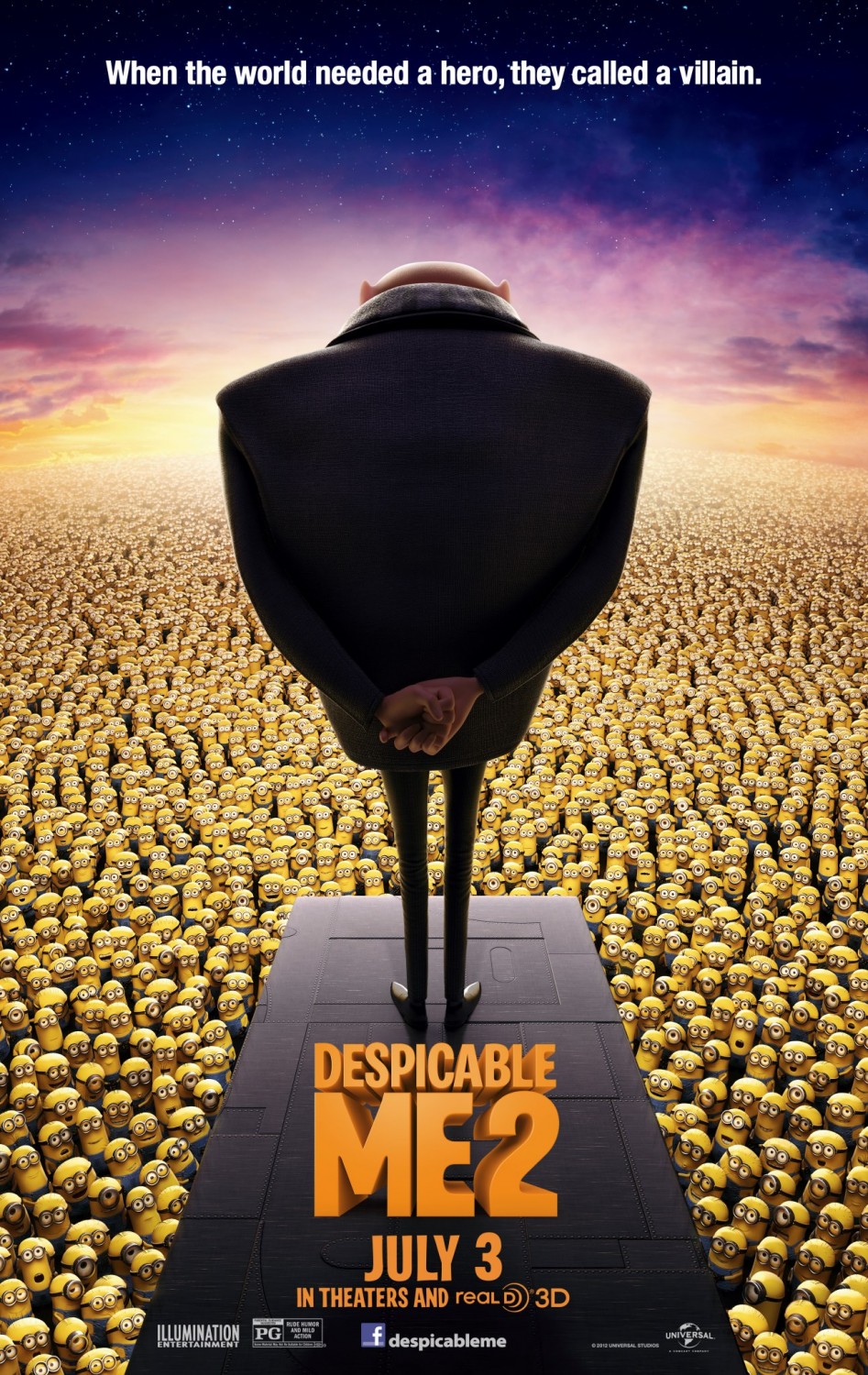
Extra Large Movie Poster Image for Despicable Me 2
Despicable Me 2
2013
PG
Produced by: Christopher Meledandri, Janet Healy
Directed by: Pierre Coffin, Chris Renaud
Written by: Cinco Paul, Ken Daurio
Starring: Steve Carell, Kristen Wiig, Benjamin Bratt
Universal Pictures

4.21/5 Stars
Consensus: While it lacks the wit and charisma the first film contained, Despicable Me 2 still manages to be a wacky and entertaining film.  

Plot: Gru (Steve Carell) is recruited by the AVL (Anti-Villain League) to help foil a new villain who has recently come a-large, meanwhile Gru must maintain the newfound stressors of being a parent.

Directing: Nothing spectacular is exhibited in this realm. The film is executed in a safe and fun fashion that is marketable and well done, just not notable. Things seem to go in a predictable and safe manner. ***

Acting: Steve Carell is as fun as ever and seems to have refined his character voice for Gru. He executes this well and his familiar and appealing screen presence translates to voice acting quite well. The voice acting done for the minions (by Pierre Coffin and Chris Renaud) is also an extremely impressive example of voice acting. The film shined most in this area. *****

Editing: A couple interesting sweeps here and there manage to work well for the film. Some framed pull backs also add to the fun film and fit with the theme that not all things are as they appear, or, don’t judge a book by its cover. One shot in particular, of a group of minions vacationing on an island, pulls back to prove that in fact the minions are captive for some future experiment. The camera’s ability to maintain some mystery or intrigue about the new super villain was also effective. ****1/2

Art Direction: Everything flows together in the fantastic and off-beat feel that the entire film has, the gadgets stand out the most in this area but Gru’s world, his neighborhood and the absurdity of his situation all work quite well and the animation of this film is perhaps the second most appealing aspect it has. *****

Cinematography: As with most animated films, the cinematography is secondary, and, in fact, essentially non-existent as the film was animated and camera angles where not a central feature at all, other than the pre-disposed rule of thirds used in the creation and animation of the product, ergo… *****

Screenplay: Offensive at times and littered with mindless fart jokes at others, this area is where the film struggled the most. The second installment of Despicable Me seemed to lack almost all the wit of the first film. That this wit was replaced by obvious fart jokes, blathering minions, and painful “bad-date” references ads insult to injury. It even managed to be offensive and mock departed loved ones, divorced families, and a myriad of other “not okay” (or at least not for a children’s film and not in my book) areas. Not that the screenplay is a total failure, even at its most obvious and painful, it had its moments, there just aren’t many of them, and you can see them all coming from a mile away. The majority of the gags where shown in the trailer and, again, the wit seems to have been pulverized out of the original concept. **


CGI/Special Effects: The animation looked sleek and clean and fun. It worked perfectly for what was intended with the product. *****

Wednesday, January 15, 2014


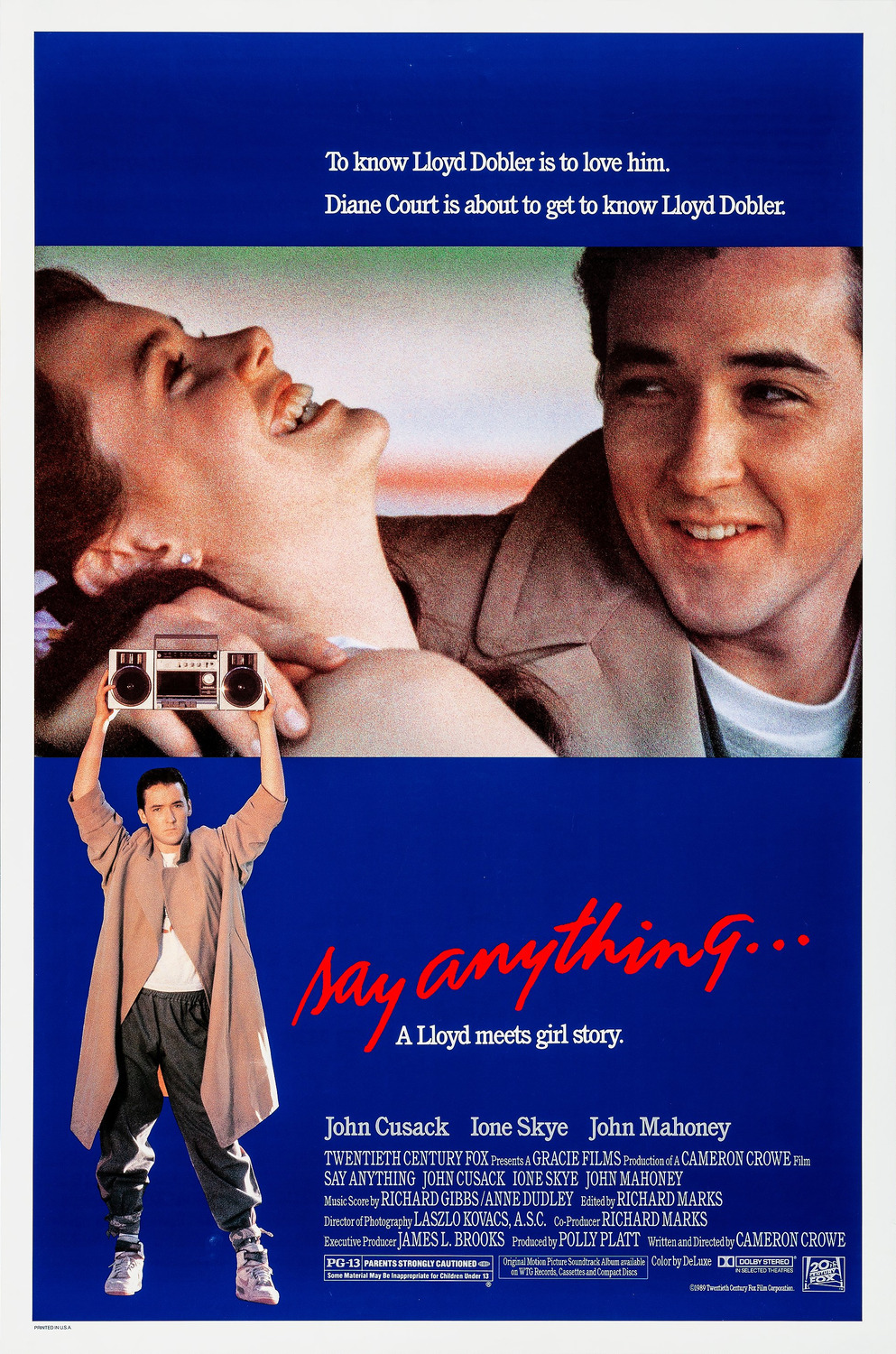
Say Anything
1989
PG-13
Produced by: Polly Platt
Directed by: Cameron Crowe
Written by: Cameron Crowe
Starring: John Cusack, Ione Skye, John Mahoney
Gracie Films

4.93/5 Stars
Consensus: One of the most iconic and memorable films of all time, Say Anything deserves far more recognition than it gets.

Plot: Lloyd Dobler (John Cusack) pursues his crush on local high school senior Diane Court (Ione Skye) the summer before she leaves for college.

Directing: Crowe managed to direct and write one the most candid and (sometimes) painfully close-to-home high school films of all time. His eye for direction and nostalgia is ideal in an uncanny and almost supernatural way. This film is an example of “simple” brilliance. There isn’t anything too flashy, and that’s what makes it so perfect, the candid and heartfelt direction is what makes the film so nostalgic and memorable. *****

Acting: John Cusack gives some of the most memorable and witty lines of all time as one of the best on-screen teens in film history. He did such a good job it became difficult to see him in any other role, than that of a witty charismatic teen with nothing to lose. Ione Skye’s performance, while still heartfelt and good, pales in comparison to Cusack’s natural youthful vigor, but is still well-done and convincing. John Mahoney (James Court) balances her sometimes mediocre performance by brilliantly playing an unintentional bad guy. His performance managed to win sympathy for an otherwise villainous arch-type, and that is something impressive to watch. ****1/2

Editing: The balance between Lloyd and Diane’s worlds is wonderfully paced and perspective is put to great use in the witty and intelligent editing. The ability to balance sub-characters and plots within the overall arch of the story also was effective and engaging. *****

Art Direction: The entire set and costuming in the film builds around Lloyd and Diane and develops their characters, from Lloyd’s “The Clash” t-shirt to Diane and John’s elegantly decorated house, everything helps tell the love story the film is focused on. For this reason the art direction was extremely successful. *****

Cinematography: One of the most iconic images from any film, but especially films of the 80s, is that of Lloyd Dobler standing outside Diane Court’s house with a stereo above his head, playing their song so she’ll know he still loves her. The swoop of the camera down on Lloyd is memorable and perfect for the film. All other shots looked clean and appealing and worked perfectly with the rest of the film. *****

Screenplay: Say Anything is one of the most quotable and well written films ever made. The prose and dialogue gorgeously capture the angst of youthful love and post-high school aspirations. Most of the golden lines are given to John Cusack who’s brilliantly drawn character has layer after layer of intelligent insights into his predicament and circumstances. *****


CGI/Special Effects: There were none! Not any of note at least. *****

Friday, October 25, 2013


Bad Religion
“Bad Religion EP”
1981
Epitaph

3.33/5 Stars
Consensus: Although it sounds like it was recorded in a toilet, and could easily be mistaken for just about any hardcore punk band from the 80s “Bad Religion EP” represents some of the most primal and raw sounds from the group in their early years. While it’s hardly the greatest album of all time, or even Bad Religion’s career, it’s certainly a commendable start and an interesting listen.

1) Bad Religion – The opener on the album sounds great and instantly grabs you in. It has every raw and biting aspect one would expect from a punk rock album in 1981. There are enough tempo changes to grab attention and a catchy chorus to boot makes for a great song. ****
2) Politics – Not giving anyone a moment’s breathe the EP transitions into another biting fast paced song. “Politics” is punk rock standard by all means, it’s raw and gritty and it sounds like its been recorded in a toilet, which adds to the element and gives it a more raw and gritty edge. ****
3) Sensory Overload – The album reaches a lower point here and this song is particularly hard to get into at first, but does eventually manage to be catchy and redemptive. The intro sounds sloppy and out of place with the rest of the song and the song never seems to find its sweet spot, save for a couple brief moments.  **1/2
4) Slaves- Heading back to the formula of the first two tracks “Slaves” offers more “standard” hardcore punk, and it sounds great. It’s aggressive, frustrated and falls apart at the end. It fits perfectly on the album while staying fresh. ***1/2
5) Drastic Actions – The intro is the concave to “Sensory Overload” and is super grabbing and catching. The song then gets quite adding a nice dynamic to the otherwise only loud CD. Unfortunately there are a couple of nasty vocal peaks that come from low quality recordings, this kills a lot of the song and makes it hard to listen to as the levels are constantly changing. This song is also the longest on the album (a whooping 2:36) and has the least interesting aspects and tempo changes to offer, making it suffer further. **

6) World War III – This wonderful 0:55 second song is straight-forward and to the point and ends on a perfect note, just as the album was about to get redundant, Bad Religion pulls out, having said their piece. The aggressive vocals and fast guitar make this the perfect ending song to a great EP. ****

Monday, October 21, 2013


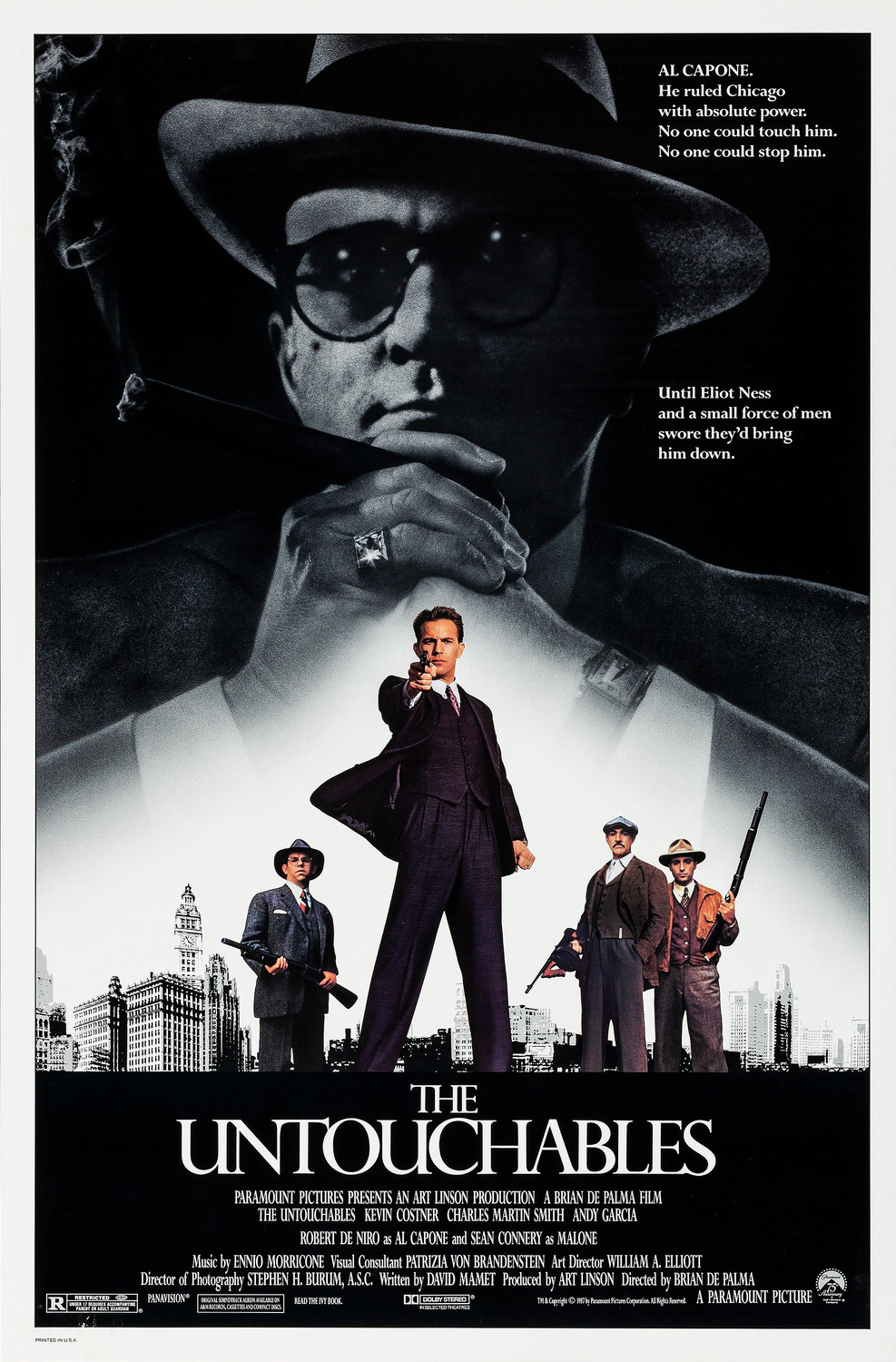
“The Untouchables”
1987
R
Produced by: Art Linson
Directed by: Brian De Palma
Written by: David Mamet
Starring: Kevin Costner, Sean Connery, Charles Martin Smith
Paramount Pictures

4.21/5 Stars
Consensus: A film that feels as classical as the era it addresses, The Untouchables is both memorable and well worth watching.

Plot: The story of the cops who brought down Al Capone (Robert DeNiro) during the prohibition era of the United States.

Directing: De Palma is most successful at creating an extremely classical tone in his more modern film; with various nods to famous films such as Battleship Potemkin (1925) De Palma has a breath of the classic era of Hollywood that feels refreshing from an 80’s flick. De Palma seemed to struggle, however, with his actor’s character arch, they seem under-directed, and notably less developed than they otherwise could have been. As a cast the actor’s never seem to quite develop a chemistry or unity together and instead feel, well… like scripted actors, and it’s unfortunate from such an otherwise polished and well toned film that this happens, but its there in more than a few parts where you realize, “oh hey… these guys are just acting, in a good movie with a good plot, but they don’t believe this.” The chemistry and tone of the actors lies largely with the director and this film struggled to find that peak, although the script, atmosphere, and all other aspects of the film were spot on. ***1/2

Acting: Again, a lack of direction hurt this otherwise great production, and we see in this film some polarity within the acting stratosphere. In particular Robert DeNiro (Al Capone) is spot on in his performance and delivers one of the most outstanding, and memorable, gangsters in film history. On the other hand we have Kevin Costner (Eliot Ness) who seems to struggle to get into his “tough-guy” cop and instead seems weak and un-emotional, maybe even a bit detached from everything that is going on. Whatever it is he’s doing, it doesn’t fit with what his character seems to be saying, or going through at all. Costner’s weak performance only makes DeNiro more desirable, and his (DeNiro's) serious lack of screen time more noticed and missed. Overall, the acting is extremely polarized and has its incredibly strong moments along with its outrageously weak and un-buyable ones. ***

Editing: In this area the film managed to really shine. The editing in the film was gorgeous and well done. Most particularly the “Odessa steps” sequence wherein Costner is in the midst of a shoot-out while trying to help a woman with a stroller up the stairs at a train station. This direct nod to Battleship Potemkin was beautifully edited together and created both intensity and beauty within the same sequence. The overall pacing of the shots and their placement was well done throughout the film, and this area may this films strongest point. *****

Art Direction: The re-creation of 1920s-40s prohibition era America contained one of the most classic tones in any film. The re-creation of suits, skirts, cars and streets was wonderfully rendered and was yet another area this film shined in. Again, the film felt classical, like it had been made during the golden age of Hollywood, the exact time-era the film was attempting to address. An enormous part of this tone is the art direction, and the art direction here was spot on. *****

Cinematography: The film opens majestically with some extreme wide shots of 1920s America and the gorgeous cinematography continues from there on out. Another wonderful shot looking directly down at Al Capone as he is getting a shave suggests that, Capone, the only person looking up at the camera, is totally set apart from everyone else in the room. He is the brains of the operation, and perhaps the only person looking opportunity dead-on. This and many other wonderful shots constitute some of the best cinematography in film history. *****

Screenplay: While the screenplay was good, and told an excellent story, it needed to be more rapid-fire to capture the tone the rest of the film so magnificently rendered. While the screen play wasn’t a complete failure, it lacked much of the intensity and wit that other gangster films such as Goodfellas (1990) or even a classic film noir such as Sunset Blvd. (1950) or The Maltese Falcon (1941) delivered so prominently. This was disappointing and inconsistent with the rest of the film’s tone and pacing, but not entirely damning as the screenplay certainly had its brilliant moments, most of the them with DeNiro, but overall the screenplay was just good. ***


CGI/Special Effects: These are especially well done and still look great even by today’s standards. Most of the special effects are explosions, and we’re ok with that since they look great and feel cool. Other blood and gore effects look grizzly and harsh, as they should, and overall the special effects were tactfully used and realistic looking. *****

Friday, October 18, 2013

“Reservoir Dogs”
1992
R
Produced by: Lawrence Bender
Directed by: Quentin Tarantino
Written by: Quentin Tarantino
Starring: Harvey Keitel, Tim Roth, Michael Madsen
Live Entertainment

4.79/5 Stars
Consensus: A Tarantino classic that is one of the most memorable, witty, and iconic gangster films ever made. 

Plot: A group of robbers are assembled to hold up a jewelry store, as complications with the robbery arise a rat is suspected among them.

Directing: Quentin Tarantino is as vicious and witty early on as he became later in his career. The dialogue is sharp, the characters aggressive and quick-tongued, and the whole film flows from violent mishap to violent mishap in a way only Tarantino can deliver. It feels a bit “film school-ish” at times, but manages to do so with the nostalgia and charisma one expects from a Tarantino film. While this clearly is not the sweet spot he would one day hit in Pulp Fiction (1994), the directing is still distinctly his, and is very holding. ****1/2

Acting: The actors all appear to be enjoying the hell out of what they are doing. Harvey Keitel (Mr. White) is great at being a gruff, but loyal gangster, his epiphany of betrayal at the end is so wonderfully communicated to the camera that it creates one of the most memorable scenes in film history. Chris Penn (Nice Guy Eddie Cabot) also gives a priceless performance along with all the other actors in the film who are memorable, and distinct. *****

Editing: Not enough good can be said of Tarantino’s fast and wild editing. The sheer pacing of the film, and the order in which it was assembled screams brilliance, let alone the flawless and gorgeous transactions that are numerable in every scene. What stands out the most is our opening exposition, the team of robbers assembled before the robbery at a diner, to the immediate cut towards the near end of the event, a man screaming and bleeding in the back of a get-away car. The sound editing is further brilliant as we hear intermittent “sounds of the 70’s” radio incorporated throughout the film as a back drop. That Tarantino had the imagination to assemble the film as such, and that he further does it with such taste and tact is impressive to say the least. One of the most superbly edited films ever made. *****

Art Direction: Especially considering the films low budget ($1,200,000) Tarantino manages to keep Los Angeles feeling as authentic as ever in this crime caper. The art direction is classy and feels very real, it succeeds especially well at re-creating the 70’s pleather and disco feel its radio intervals seemed to infer. The art direction was further successful by nodding to 70’s b-crime films while creating its own distinct flair at the same time. The art direction is perfect for what this film is, it feels like an over-the-top b-film from the 70’s, with a lot more class and certainly more style. *****

Cinematography: The film is again successful in this category. One of the most memorable, and pretty, shots in the entire film is when Mr. Blonde (Michael Madsen) leaves a warehouse to go and get something from his car, and is trailed by the camera, as he get to his car the camera stops, waits for him to get the item and then resumes following him again as he heads back into the ware house. Overall the cinematography is also exceptionally well done. *****

Screenplay: Classic Tarantino, who can be considered one of the greatest screen writers of all time, is again ever on his a-game in this film as he is in his later films. The witty banter and creative, albeit, vulgar dialogue, is as much, or if anything is more, an important of the film than any action sequences or turn of events. The fact that the majority of the film takes place in one, maybe two rooms, with a couple additional locations, and that Tarantino manages to entertain us with characters who are mostly just talking about things that have recently happened to them, makes a strong argument that this is one of the better screenplays ever written. It’s short, sweet, brutal, and to the point. *****


CGI/Special Effects: The most “special effects” that went into this film is an excessive amount of blood. It is gorgeous flowing blood, but nothing that stands out so much as to say that the film relied heavily on this category if at all. One fake looking bullet in Quentin Tarantino’s head as Mr. Brown, argues that the film likely had the low budget it did, and that perhaps works for it as much as against it in maintaining its specific “b-esq” tone. ****